 Skip to content
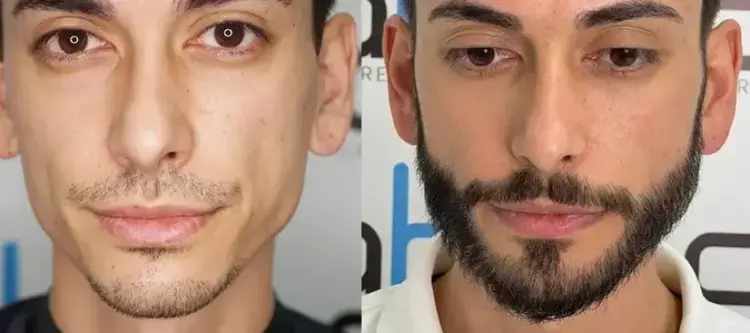
This guide answers common questions about beard transplants in detail. Facial hair—growing along the cheeks, chin, and neck—typically begins to develop during puberty in men. Driven by testosterone, it reaches peak density around age 20 as the hair transitions into thicker terminal hair. Naturally, beard hair is significantly coarser and thicker than scalp hair.
However, some men experience sparse facial hair growth, while others have none at all. In cases of partial or complete hair loss, a beard transplant is often the go-to solution.
What Is a Beard Transplant?
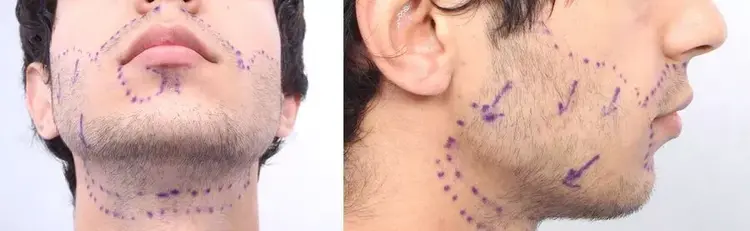
A beard transplant is a hair restoration procedure that addresses patchy areas or a complete lack of facial hair across the cheeks, chin, and neck. As a golden rule, the transplanted follicles must be harvested from the patient’s own body. Typically, strong hair follicles from the back of the head or beneath the chin are used as donors to create a fuller, better-defined facial appearance.
Similarly, the mustache area can suffer from these exact same issues. For this reason, beard and mustache transplants are frequently combined into a single procedure. Statistically, the demand for beard transplants is growing year over year, currently making up about 5% of all male hair restoration procedures. Living in the digital age plays a massive role in this trend; seeing celebrities flaunt their new beards on social media significantly drives up demand.
Today, Turkey is home to numerous top-tier clinics and highly skilled doctors specializing in beard transplants.
Who Is a Good Candidate for a Beard Transplant?
Ideal candidates for a beard transplant typically fall into five main categories.
- Men with no natural facial hair growth: Those who experience a complete lack of beard growth.
- Individuals looking to fill in a patchy beard: Men wanting to increase the density and fullness of sparse facial hair.
- Those wanting to conceal facial scars: Patients looking to cover up scars from burns, accidents, or previous surgeries.
- Corrective transplant patients: Men seeking to fix a previously botched or unsuccessful beard transplant.
- Transgender men: Female-to-male patients seeking facial hair as part of their gender transition.
Now we will examine these in detail.
1. Beard Transplants for Men with No Facial Hair
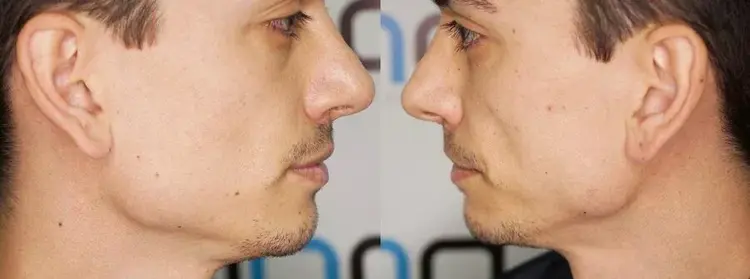
Men who experience little to no facial hair growth across the mustache, cheeks, and chin due to genetic or hormonal factors fall into this category. Low androgen levels in these individuals directly contribute to the complete absence or underdevelopment of a beard. For such cases, medical therapies should always be the first-line treatment. However, if a patient sees no results from medical treatments by the age of 25, a beard transplant becomes the ultimate, permanent solution.
2. Increasing Density for Patchy Beards”
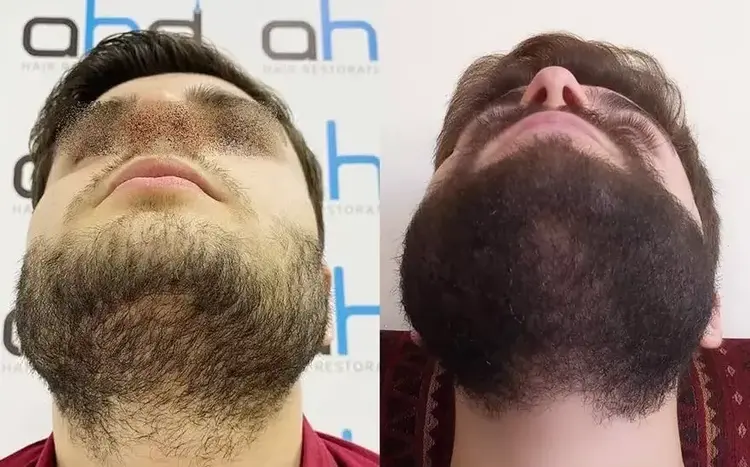
Some men experience irregular, bare patches across their cheeks, face, and chin where hair fails to grow. For them, a beard density transplant can create a noticeably thicker, fuller appearance. In fact, individuals in this group make up the majority of beard transplant applicants.
3. Beard Transplants for Scars and Burns
Accidents, burns, or surgical procedures can leave behind scarred tissue on the face, which often takes a heavy psychological toll. In these situations, restoring the natural appearance of the damaged area is essential. A targeted beard transplant can yield remarkably successful outcomes for these patients.
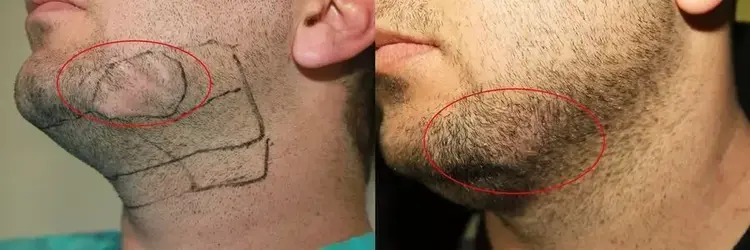
Beard transplants offer a highly effective solution for a variety of conditions, including surgical and burn scars, gaps in the mustache area following cleft lip repair, scarring from severe folliculitis, traction alopecia in the beard area, and localized facial hair loss caused by alopecia areata.
Below, you can see the before-and-after results of a beard transplant performed on a man who suffered facial burn scars during childhood.
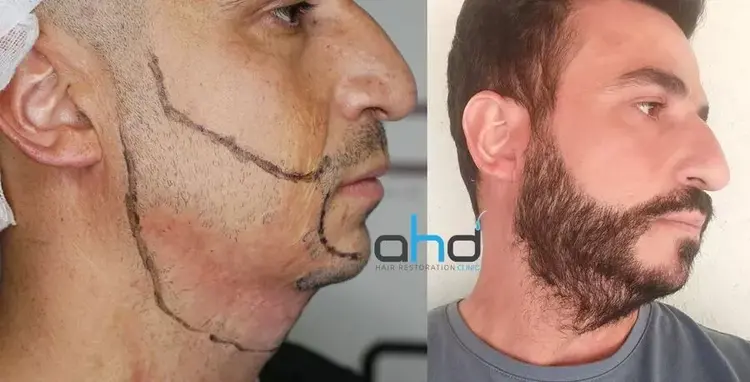
4. Correcting Botched Beard Transplants
Beard transplant surgery comes with its own unique set of artistic and technical principles. If these rules are ignored and the procedure is carried out recklessly, it can lead to deeply unnatural results. While performing a revision procedure on these patients is challenging, it is entirely possible.
Below are two examples of poorly executed beard transplants performed at other clinics.


In these unnatural-looking cases, the correct implantation angles were ignored, and multi-hair grafts were used. The only way to fix such poor results is to individually extract the misplaced grafts—a highly complex procedure that requires immense expertise. AHD Clinic is one of the few clinics worldwide capable of successfully performing these intricate beard transplant revisions.
5. Transgender Men
Beard transplants can also be performed for female-to-male (FTM) transgender individuals pursuing gender affirmation.
Who Is Eligible for a Beard Transplant?
Can anyone get a beard transplant, and is everyone a good candidate? Naturally, the answer is no. However, for those who are suitable candidates, this procedure yields remarkably successful and permanent results.
Before deciding on a beard transplant, there are three critical factors to consider, as they directly impact the final success of the procedure.
- Recipient Area Size and Graft Count: This is the single most critical factor affecting the outcome. Simply put, the number of grafts implanted per square centimeter plays a vital role in achieving that desired, dense look.
- Graft Thickness: The thicker the transplanted hair shafts, the fuller the final result will appear.
- Adequate Donor Supply: Having a sufficient donor area is essential, particularly for patients looking to undergo both hair and beard transplants simultaneously. Determining how to balance donor grafts between the scalp and beard requires the clinical judgment of an experienced hair restoration surgeon.
How Is a Beard Transplant Performed?
In many ways, a beard transplant is quite similar to a hair transplant. The primary goal of the procedure is to fill in patchy areas and add density to the facial hair.
The operation can be broken down into six main stages:

- Preliminary Consultation and Evaluation: The process begins with a comprehensive examination by an experienced surgeon, who assesses both the donor and recipient areas. Based on this evaluation, the exact number of required grafts is calculated for eligible candidates. Blood tests may be performed if necessary. Finally, the boundaries of the implantation area are carefully outlined using a medical surgical marker.
- Pre-Operative Preparation: Blood-thinning medications must be discontinued prior to the procedure if used. Additionally, patients should avoid direct sun exposure leading up to the surgery.
- Facial Hairline Design: A custom beard line is planned to complement the patient’s natural facial structure.
- Local Anesthesia: Both the donor and recipient regions are numbed with local anesthesia, ensuring a painless and comfortable experience throughout the procedure.
- Graft Harvesting: Once local anesthesia takes effect, grafts are individually extracted from the donor site or beneath the chin using the FUE (Follicular Unit Extraction) technique. This is the most crucial phase of a beard transplant. While harvesting can technically be done via FUT (Follicular Unit Transplantation), graft extraction at AHD Clinic is performed exclusively using the FUE method.
- Implantation: Lastly, the harvested follicles are transplanted one by one into the designated recipient area.
There are three primary techniques that can be utilized during a beard transplant procedure:
a) DHI Beard Transplant: Achieving natural-looking, successful results is much easier with this method. It is the primary approach favored here at AHD Clinic.
b) FUE Beard Transplant: In this technique, tiny incisions are made individually across the recipient area before inserting the grafts one by one into these sites. Strict adherence to proper implantation angles is essential to achieve a natural outcome.
c) Stick and Place Technique: Using a needle, a single channel is created and a graft is immediately placed into it.
DHI Beard Transplant
Also known as the implanter pen technique, this approach offers a higher success rate for beard transplants. At AHD Clinic, procedures such as hair, beard, mustache, and eyebrow transplants have been performed exclusively using the DHI technique since 2010. The core principle of the application is identical to a standard hair transplant; the only difference is that the recipient area receiving the grafts is the beard region rather than the scalp.
During a DHI beard transplant, specialized tools called implanter pens create a micro-incision and simultaneously place the hair follicle into it in a single motion.
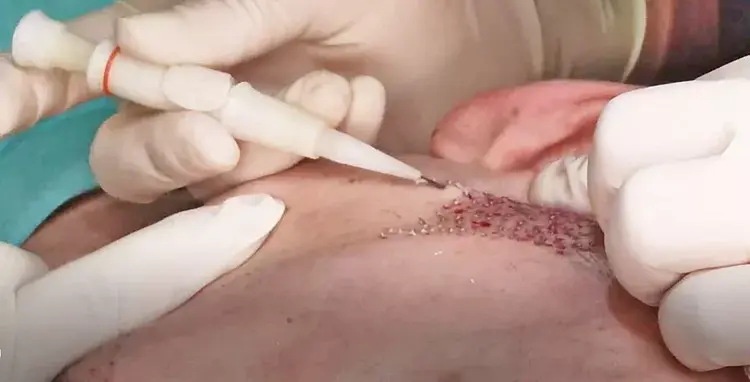
The DHI technique offers numerous advantages, including precise angle control, rapid recovery, a natural appearance, and the ability to achieve higher transplantation density.
Which Donor Areas Are Used for a Beard Transplant?
Both facial hair (from beneath the chin) and scalp hair follicles can serve as donor sources for this procedure.
- 1. Scalp-to-Beard Transplant: When a high number of grafts is required to cover a broad area, utilizing hair follicles from the donor site at the back of the head is the most practical choice. For instance, individuals with no facial hair require a substantial graft count, making the donor area on the nape the primary choice for extraction.
- 2. Beard-to-Beard Transplant: When the recipient area is small and requires only a limited graft count, stronger and thicker beard hair is preferred. For example, in a patient with a minor surgical or burn scar on the cheek, transplanting hair follicles harvested from beneath the chin yields the best results.
How Many Grafts Are Needed for a Beard Transplant?
The number of grafts required for a beard transplant varies depending on the size of the treatment area. Typically, anywhere from 300 to 5,000 grafts may be needed. To achieve ideal density, a surgeon should aim for an average of 30 to 40 grafts per square centimeter. The following examples illustrate how graft counts are determined:
| Recipient Area | Graft Count | Description |
|---|---|---|
| Full Beard Transplant (No Prior Facial Hair) | 4000-5000 | Requires a sufficient donor supply. The procedure is typically completed over 2 days. A touch-up session may be required after 1 year if necessary. |
| Beard Density Enhancement | 500-2500 | Graft numbers vary depending on the size of the target area. |
| Cheeks & Mid-Face | 750-1000 | Estimated count per cheek/side. |
| Sideburns | 200-300 | Estimated count per sideburn. |
| Scar & Burn Reconstructive Transplant | 150-1000 | Graft requirements depend on the surface area of the scarred tissue. |
How to Achieve Natural-Looking Results in a Beard Transplant
Keep this in mind: an unnatural-looking beard will inevitably lead to disappointment. Achieving a truly seamless, natural result requires strict adherence to specific surgical principles. These core guidelines can be broken down into three key factors:
- Use of Single-Hair Grafts: The grafts selected for implantation must consist exclusively of single-hair follicles. Multi-hair grafts should strictly be avoided, particularly along the outer margins and boundaries of the beard line. If multi-hair grafts are extracted from the donor site, they must be meticulously separated into individual single hair units prior to implantation.
- Refined and Homogeneous Channel Creation: The micro-incisions made for the grafts must be exceptionally fine and uniformly distributed. Creating oversized channels can result in pitting or indented scars around the base of the transplanted follicles. By using implanter pen tips ranging from 0.6 mm to 0.8 mm, the risk of visible scarring is virtually eliminated.
- Precise Angle and Direction: Implantation channels must be created at the correct angle and direction to achieve a natural appearance. For instance, across the facial region, channels should be directed downward at precise angles of 5 to 10 degrees. The image below illustrates the proper direction and orientation for channel creation.

Failure to adhere to these three fundamental rules will inevitably compromise the natural appearance of the final result. Unnatural, upright-growing multi-hair grafts and pitting scars around the follicle bases are, unfortunately, the direct consequence of improper surgical execution. Keep in mind that regret rates among patients who undergo flawed or unsuccessful beard transplants are remarkably high.
| Recipient Area | Implantation Angles & Guidelines |
|---|---|
| 1. Mustache | Requires single-hair grafts exclusively. Follicles at the philtrum (center) grow directly downward, while those toward the edges angle outward to the left and right. |
| 2. Chin & Goatee Area | The goatee area curves gracefully downward from the mustache corners to join the chin hair. Follicles grow downward, lying almost parallel to the skin surface. The chin typically features the highest graft density on the face. |
| 3. Submental Area (Under the Chin / Mid-Neck) | Seamlessly connects the cheek, chin, and submandibular hair. Follicle direction here is naturally irregular, pointing left, right, upward, and downward. |
| 4. Sideburns | Follicles must point strictly downward and consist solely of single-hair grafts. Implantation angles should be flat against the skin, between 5 and 10 degrees. |
| 5. Cheeks | Outer Cheek Line: Curves gracefully from the sideburns down toward the mustache. This margin should feature subtle natural irregularity made up strictly of single-hair grafts. Mid-Cheek: Can accommodate 2–3 hair units, though multi-hair grafts should be used sparingly. Growth direction points laterally and downward. |
| 6. Submandibular Area (Lower Jawline) | Spans the zone extending approximately 2 to 3 cm downward beneath the lower margin of the jawbone. |
| 7. Lateral Neck Area | Requires lower density compared to other facial zones. Follicles along the absolute lowest boundary are oriented pointing upward. |
In the illustration below, you can see a schematic representation of the facial regions detailed in the table, along with the precise growth directions required for each area.

Beard Transplant Costs in Turkey
For individuals considering a beard transplant, budgeting for the procedure is naturally an important consideration. Four key factors influence beard transplant pricing both in Turkey and globally:
- Graft Count: The size of the recipient area and the resulting number of required grafts serve as the primary determinant of cost. Many surgeons structure their pricing on a per-graft basis, whereas some clinics charge a flat fee regardless of the total graft count.
- Surgeon Expertise and Clinic Reputation: Pricing naturally varies between a highly recognized surgeon with an established reputation and a lesser-known practice. In Turkey, renowned hair restoration specialists command higher rates compared to low-cost “black market” or unlicensed clinics.
- Technique Used: Mustache and beard transplants performed using the DHI technique generally carry a higher price tag. The specialized instruments required for DHI are costly, and relatively few surgeons possess the advanced skill and expertise needed to perform it effectively. However, DHI delivers superior, highly satisfying outcomes. Conversely, standard FUE beard transplants remain relatively more affordable.
- Additional Expenses: Accommodation, private airport transfers, and post-operative care kits also impact total costs. Some clinics include these comprehensive services within their all-inclusive packages, while others charge for them separately.
How Much Does a Beard Transplant Cost in Turkey and Worldwide?
Geographic location plays a significant role in determining the overall cost of a beard transplant. Overhead expenses—such as rent, taxation, and labor costs—vary considerably from country to country and even between cities.
Considering these financial factors, pricing in Turkey remains substantially more affordable than in United Kingdom or the United States. This cost advantage, combined with high clinical standards, serves as the primary driver behind the strong global demand for hair and beard restoration in Turkey.
Estimated cost ranges by region can be summarized as follows:
| Country / Region | Estimated Cost Range |
|---|---|
| Turkey | Offers typically range between ₺50,000 and ₺250,000, which corresponds to approximately €1,700 – €8,000 depending on exchange rates and treatment scope. |
| Europe (Germany, Netherlands, France) | Rates generally vary from €4 to €8 per graft, with total procedure costs falling between €5,000 and €15,000. |
| United Kingdom | The UK is among the most expensive destinations for beard transplants. Prices at reputable clinics range from £7,500 to £20,000. |
| USA | Pricing per graft ranges from $4 to $10 USD, bringing the total estimated cost in the U.S. to between $5,000 and $20,000. |
Key Considerations When Researching Beard Transplant Costs
When evaluating options for a beard transplant, price should never be the sole determining factor. To ensure a safe procedure and natural-looking results, you should thoroughly assess the following critical details during your research:
- Clinic Trust & Credibility: Does the clinic inspire confidence? Are you assured that they will provide continuous support and follow-up care in the event of a complication or unexpected outcome?
- Independent Reviews & Patient Feedback: Thoroughly review patient feedback, recommendations, and complaints on independent forums and medical review platforms before committing.
- Surgeon Experience: Verify the surgeon’s years of specialized experience in facial hair restoration. Carefully evaluate both the practitioner and the clinic facility.
- Before-and-After Portfolios: Examine real patient before-and-after photograph galleries produced by the surgeon. Comparing these outcomes will help you identify the best clinical approach for your expectations.
- Pricing vs. Quality: Neither the most expensive nor the cheapest clinic guarantees superior results. Keep this balance in mind throughout your financial assessment.
- Misleading Marketing: Do not base your decision solely on promotional advertisements, as deceptive marketing tactics are unfortunately prevalent in the industry.
Keep in mind that a beard transplant is a specialized surgical procedure that demands true artistic precision. Correcting a failed or improperly executed transplant often incurs significantly higher costs than the initial surgery. Frankly speaking, proceeding with a beard transplant without thorough research dramatically increases the likelihood of long-term regret.
By carefully considering these clinical recommendations, you substantially improve your chances of achieving the natural, satisfying results you expect.
Schedule a personalized evaluation with AHD Clinic today.
FREQUENTLY ASKED QUESTIONS (FAQ)
- A 1,000-graft beard transplant takes approximately 4 to 5 hours.
- Full restoration for severe patchy beard loss or alopecia (requiring 4,000–5,000 grafts) may be spread over 2 to 3 days.
- As a general surgical protocol, procedures exceeding 2,000 grafts are best divided into a two-day session for optimal comfort and outcomes.
- For Complete Absence of Facial Hair (Alopecia/Patchiness): It is best to wait until age 25. If there is no response to non-surgical medical therapies by this age, a beard transplant is recommended.
- For Increasing Density in Sparse Beards: Age 20 is typically ideal, as facial hair growth patterns have largely stabilized.
- For Scar Tissue & Burns: Reconstructive transplants over scar tissue, burn marks, or surgical scars can be safely performed at any age.
Take the Next Step with AHD Clinic
If you are considering a beard transplant, you can easily connect with the AHD Clinic medical team via WhatsApp. Following an initial assessment to confirm your candidacy for the procedure, our experts will provide you with a comprehensive consultation to ensure you achieve natural, long-lasting results. Contact us today to receive detailed information tailored to your needs.
